
Men’s World Cup · 2026
Ferran Torres
Began with futsal at EPLA school, entered Valencia’s youth system at seven, and later scored Spain’s World Cup-winning goal.
Official FC Barcelona biography ↗
The American lesson
America already understands what a court can do.
A court can turn a small space into a game, a school routine into a culture, and a first chance to play into something much larger. The question is whether futsal can unlock that same possibility in the gyms, courts, and community spaces America already has.
Follow the American LessonStart with what America already knows
The United States did not become the world’s great basketball nation only by selecting elite teams. Basketball first became part of American childhood: courts in schools, parks, neighborhoods, and community centers; a ball; a few players; a game that could begin.
USA Basketball: Men’s Olympic history·Women’s Olympic history
That immense base produced far more than medals. It produced recreation, school identity, community, careers, culture, and generations of people who understood and loved the game. Olympic excellence came far downstream.
That is the American lesson: when a court game becomes easy to start, easy to repeat, and easy to find, it can become part of a country’s sporting imagination.
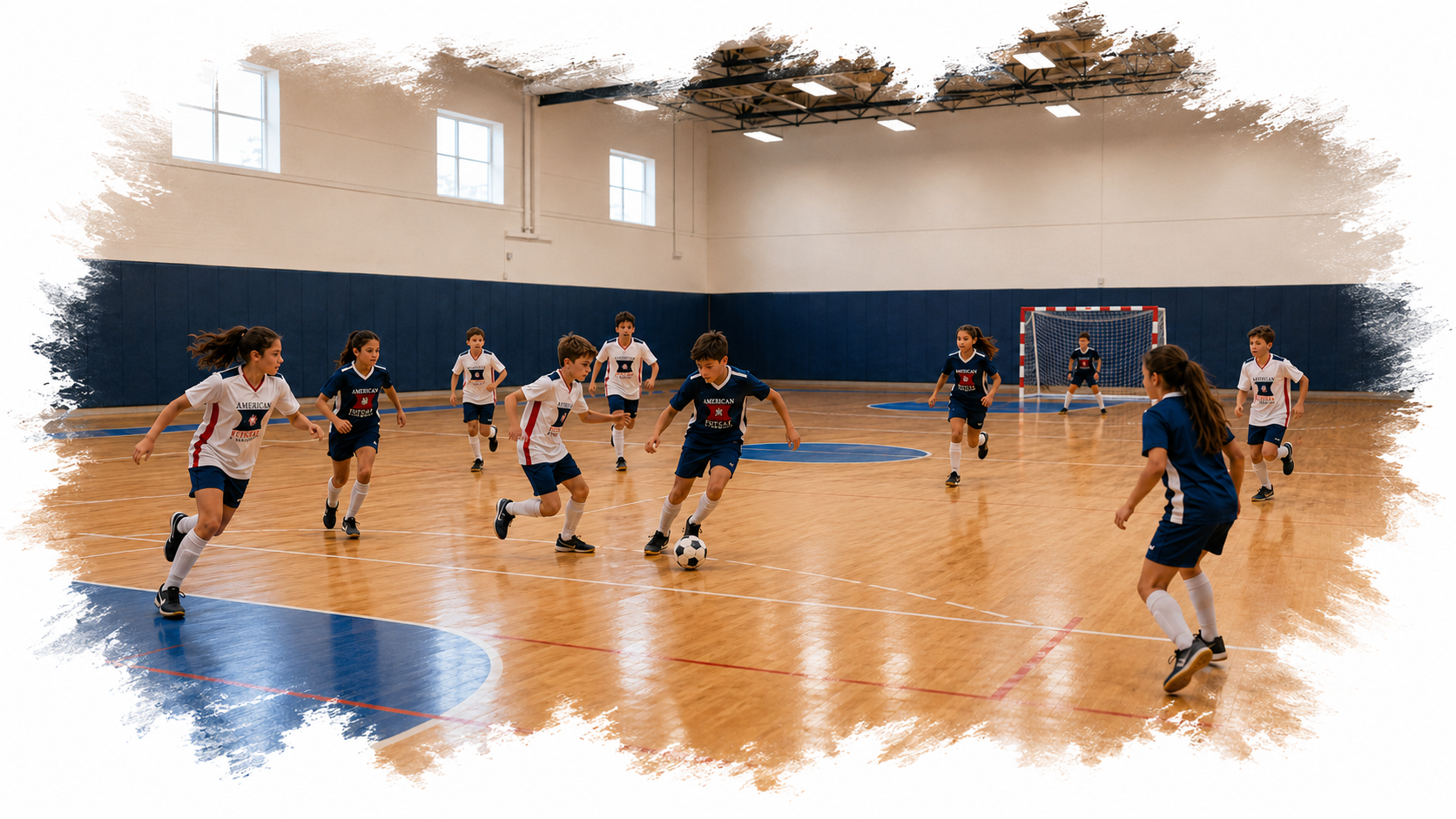
Across America, many of the spaces that made basketball easy to find can also host futsal. With the right markings and goals, one shared floor can serve two great court games.
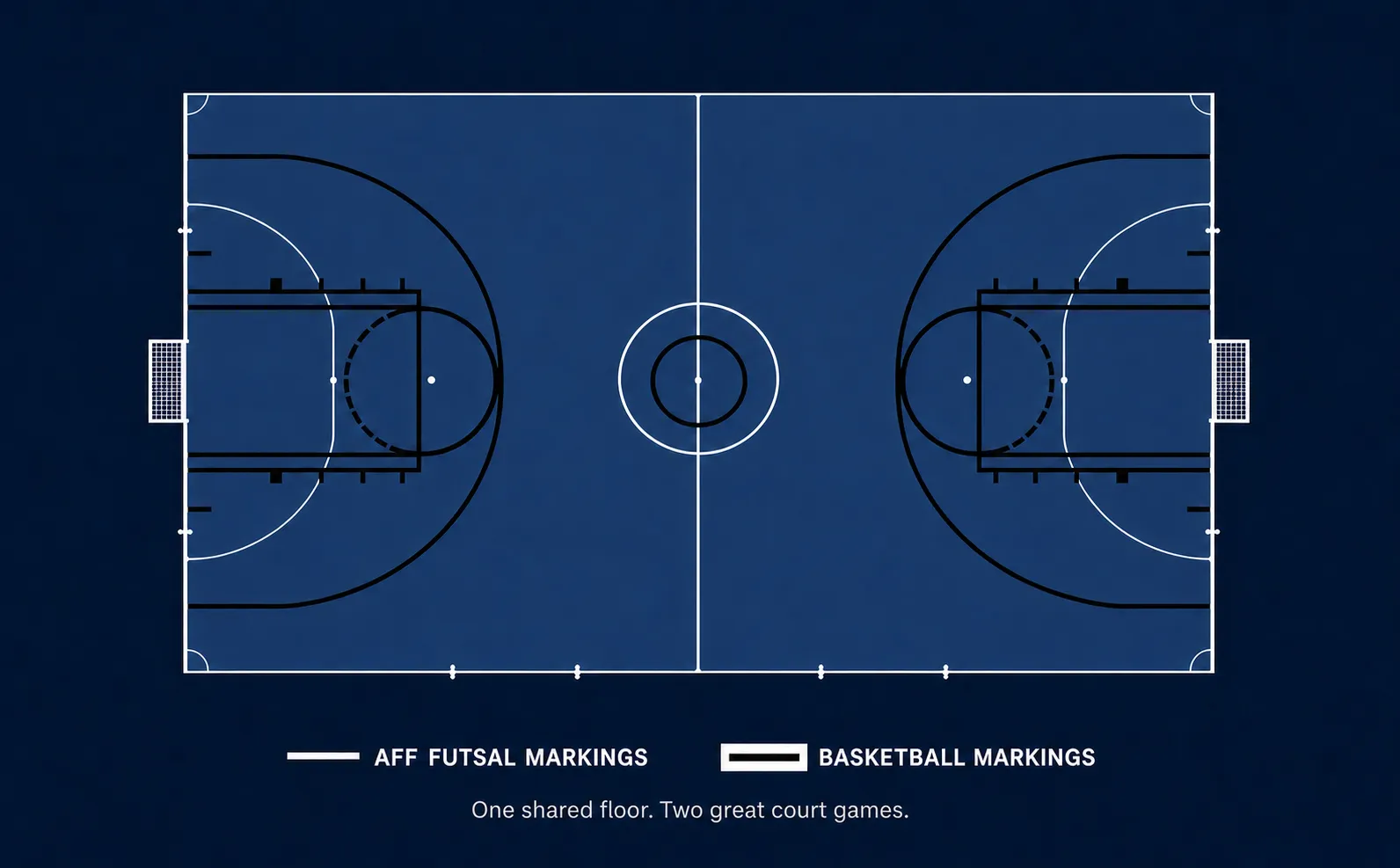
The same opening is already here.
America does not need to build a new sporting landscape from scratch. Futsal can begin in many of the spaces communities already have.Then look at the world stage
Spain’s story points back to the same idea: children need places to meet the ball early, often, and meaningfully. Futsal is one part of that culture—in schools, clubs, neighborhoods, gyms, and public courts.
It is a pattern, not a single anecdote. AFF’s source audit has found public documentation of organized or formative futsal experience for at least eight players across Spain’s two championship squads.
Men’s World Cup · 2026
Began with futsal at EPLA school, entered Valencia’s youth system at seven, and later scored Spain’s World Cup-winning goal.
Official FC Barcelona biography ↗Women’s World Cup · 2023
Combined football with futsal, became a Spanish youth futsal champion, and later started every match of Spain’s World Cup run.
El País profile ↗The player-development thread
Spain’s recent success is not presented as proof that futsal alone creates champions. It points to something larger: a playing culture where children encounter the ball early, often, and in varied environments, including futsal.
8+
Our current audit includes Ferran Torres, David Raya, Marc Cucurella, Nico Williams, Pedro Porro, Borja Iglesias, Teresa Abelleira, and Claudia Zornoza. The count reflects publicly documented experience—not a claim that every squad member’s childhood history is known.
The documented minimum counts organized or clearly described formative futsal experience supported by official biographies, interviews, or established reporting. It is not an estimate of participation across either full squad.
These examples do not claim that futsal alone created these players. They show that futsal appears in the formative story of players developed inside a broader culture of early, repeated, high-quality play.
The opportunity compounds
First order
More movement, more decisions, more confidence, more belonging—available close to home and without an elite price of entry.
Second order
Schools activate existing spaces. Families connect. Teachers, coaches, clubs, leagues, and local traditions begin to form.
Third order
A larger participation base creates more lifelong players, more leaders, more innovation—and a much deeper pool from which excellence can emerge.
The vision is not simply better soccer players. It is a new American court culture—with benefits that multiply outward.
Why the court matters
Excellence is possible. Participation is the promise.
MOVE
Continuous play builds movement, balance, coordination, and fitness.
THINK
Children learn to read space, pressure, teammates, and possibilities.
CONNECT
Small teams keep every child visible, involved, and connected.
GROW
Creativity, communication, persistence, and independence grow with the game.
A global idea, not a one-off
Different countries use different systems. The shared principle is simple: more children playing, more often, in places they can reach.
Japan
Japan expanded youth futsal and small-sided structures rather than waiting for a street-football culture to appear.
Portugal + France
Both countries operate school futsal opportunities for girls and boys through national systems.
Ireland + Brazil
From Ireland’s school introduction programs to Brazil’s public-school competitions, the game adapts to local needs.
These programs are not identical. Together, they show that futsal can work across very different educational and sporting cultures.
America’s advantage
We already have the schools.
We already have the courts.
We already have the children.
What is missing is the invitation—and a system that helps schools begin.This is not only a vision. One existing school gym has already shown how many more hours of play a small court can create.