
Child-sized ball
Easier to control and strike cleanly.

Futsal is built for schools
More than 30 million people play futsal worldwide, and the game has its own FIFA World Cup. Yet it can begin with something much smaller: a familiar school gym, age-appropriate equipment, and a child’s first chance to play. AFF is beginning locally in Orlando and working with interested schools, families, educators, and community partners to create practical futsal entry points.
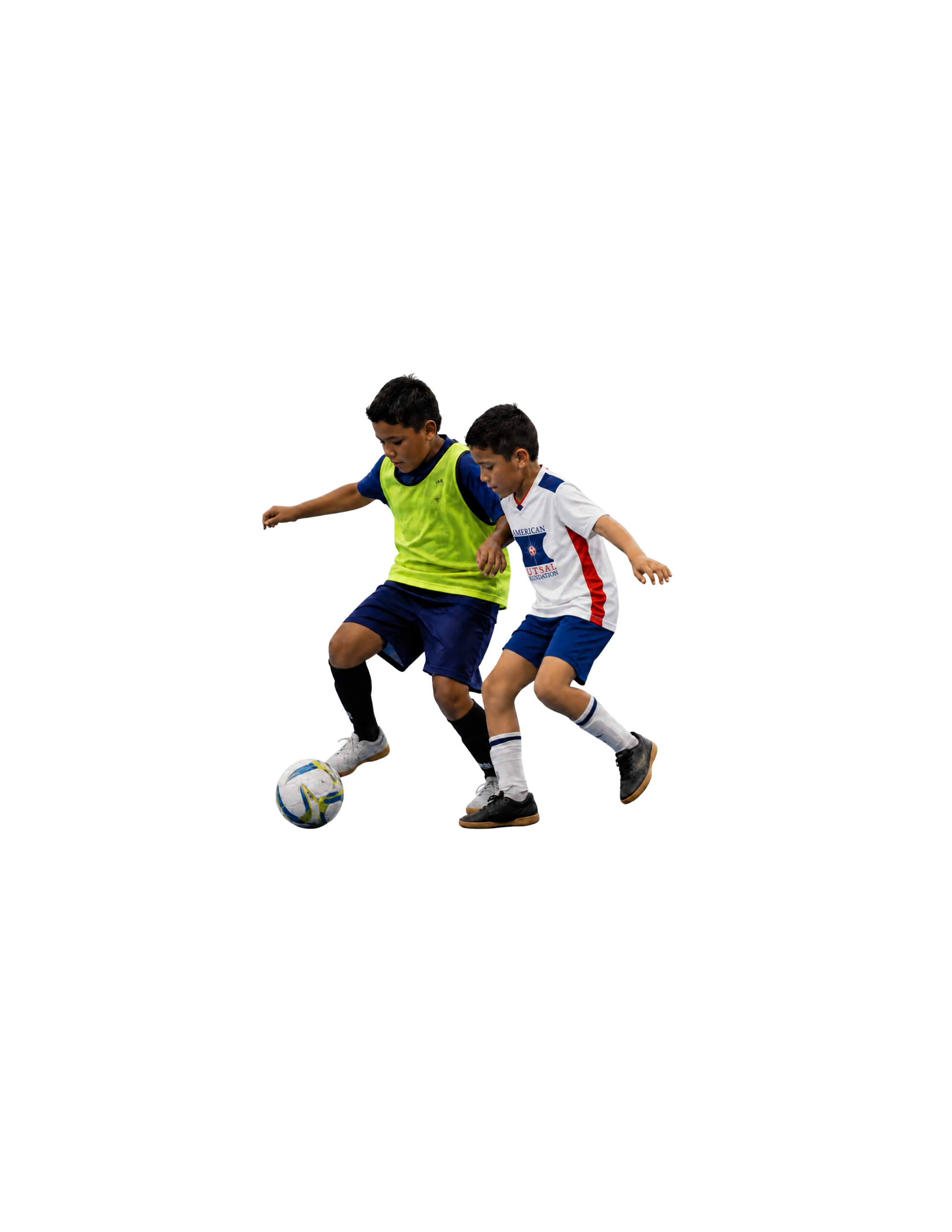
5v5 • Hard court • Low-bounce ball • No walls • Age-appropriate play
Built around young players
Many school sports begin with equipment and facilities designed for older children and adults. The target may be too high, the space too large, or meaningful involvement too dependent on size and maturity.
Easier to control and strike cleanly.
A target that fits younger players.
More involvement, closer decisions.
Rules adapted to how children learn.
Scaled to the child
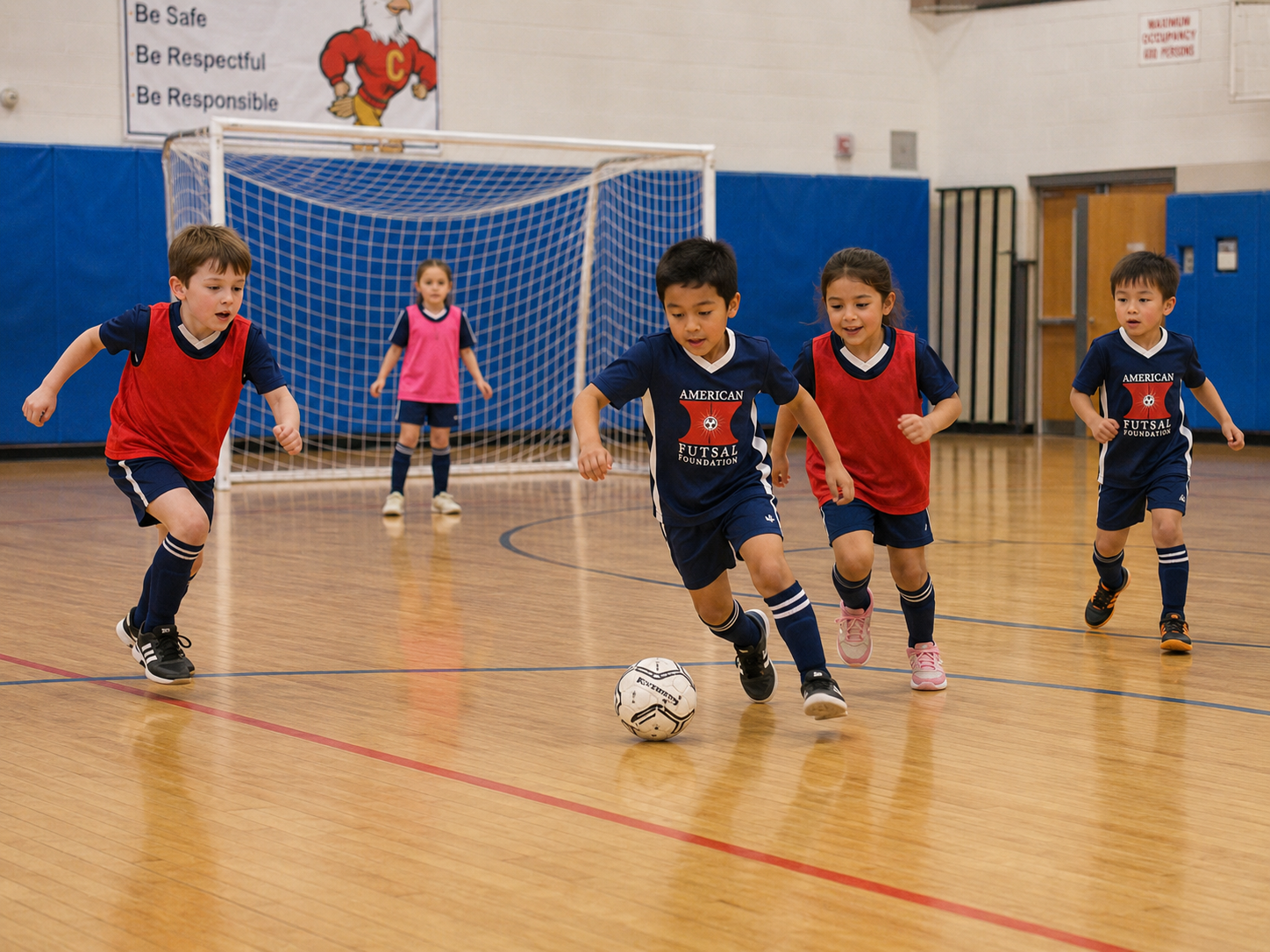
Age-appropriate balls, goals, courts, match lengths, and laws let younger players experience the whole game: moving, passing, defending, creating, and scoring. The equipment meets them where they are; the game keeps challenging them as they grow.
Different strengths
A child does not need to be the tallest, strongest, fastest, or most physically mature student in the gym to become important to the game.
Futsal rewards awareness, timing, creativity, and the willingness to help a teammate. Boys and girls learn the same game; beginners improve through repetition; children who may not immediately see themselves as athletes can discover a role that matters.
For some children, smaller groups, clear boundaries, and familiar routines can make the game easier to enter. Futsal can be adjusted thoughtfully so more children have a genuine chance to participate.
A different doorway
Because futsal is new to many students, it can open a different doorway into school sport. It may appeal to children who have not yet found their place—not because it asks less, but because it asks something different.
For some children, futsal may be their first team sport.
For others, it may be a new place to use abilities they already have.
There is more than one way to find your place in the game.
Want the deeper version?
See how age-appropriate equipment, prepared educators, repeated play, and simple measurement work together inside a school gym.
Explore the modelFrom the gym outward
Once children have a good first experience, a school can give them somewhere familiar to return. Futsal can begin through PE, grow through a club, and become part of the school community.
Physical education and teacher preparation
A physical education unit can introduce entire grade levels to movement with the ball, cooperation, simple laws, small-sided play, and futsal’s distinct rhythm.
AFF is developing age-specific curriculum and practical teacher guidance so educators can introduce the game clearly, safely, and confidently—without needing to become specialist futsal coaches.
A prepared educator does not need to know everything about futsal. They need enough guidance to give children a good first experience.
Recurring or after-school clubs
Physical education gives children a first experience. A school club gives them teammates, a shared identity, and somewhere familiar to return each week—where they can keep playing, improve through repetition, represent their school, and build relationships around the game.
For many children, a school club can become the first place where the game feels like theirs.
Equipment and practical access
A school needs proper equipment, but it should not need a new athletic facility.
AFF can help identify age-appropriate goals, balls, markings, storage, and practical court solutions. Where resources permit, donors, businesses, foundations, PTAs, and community partners may help remove the first equipment barrier.
AFF is also exploring future outdoor court upgrades, including modular multi-sport surfaces that could help existing concrete basketball courts support futsal and other sports when gym access is limited. These are future opportunities, not confirmed school projects.
A contribution can put two goals, a set of balls, and a real place to play inside a school gym.
Equipment assistance will depend on location, funding, readiness, and available partnerships.
Change the Game
AFF partnered with a local public school to add futsal markings inside an existing gym. The building stayed the same. The space gained a new game, a wider range of participants, and thousands of additional hours of use.
One AFF-supported court conversion has already supported more than 36,000 documented player-hours of futsal activity.
It is a simple example of what can happen when a school sees familiar space differently.
This could happen in your gym.
How change begins
AFF starts with a simple goal: help one school create something children value, educators can sustain, and a nearby school may eventually want to repeat.
That may begin with one PE unit, one prepared adult, and ten children meeting after school once a week.
One school can create a place to play. Nearby schools can create a league, a calendar, and a pathway.
Local change needs local people
Educators
A teacher, athletic director, principal, or after-school leader can open the first door and give children a chance to try the game.
Parents
A parent can share the idea, connect interested families, introduce AFF to a school leader, and ask a simple question: Why is this not available here?
Supporters
A donor, business, foundation, PTA, or community organization can help provide equipment, teacher preparation, or support for the first club.
One person may see the need. Another may open the gym. Someone else may provide the equipment. AFF can help bring those pieces together.
Bring the idea closer to home
AFF is beginning locally in the Orlando area and looking for schools, families, educators, and community partners who can help create practical futsal entry points. A connection to a PE teacher, athletic director, principal, PTA leader, or community partner is often the fastest way to begin.
Futsal is the Solution.