

A life in futsal
Mestre Zego
Antonio “Zego” Azevedo
Player. Pioneer. Teacher.
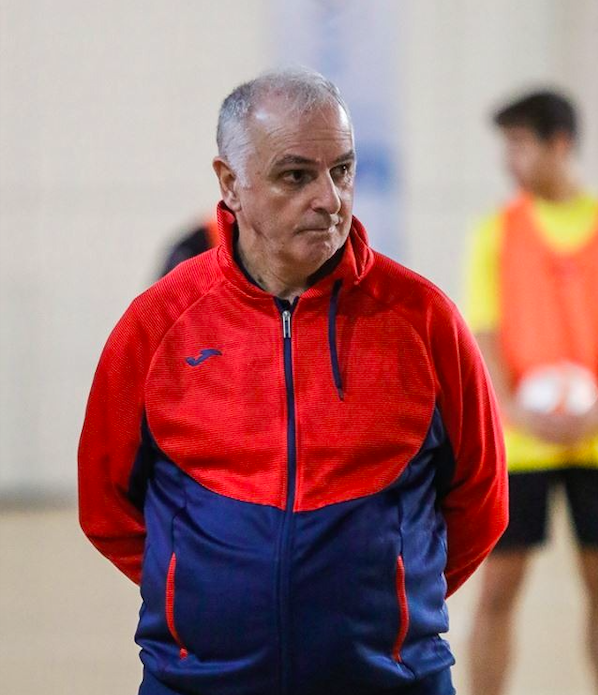
A Brazilian international, pioneering tactician, and mentor to generations of players and coaches, Zego has spent a lifetime advancing futsal while remaining devoted to the part of the game he values most: teaching young people.
AFF Board Member
Zego’s philosophy of the youth game
“We must take care of the youth game.”
For Zego, youth development is not a reduced version of the professional game; it is the foundation of the sport itself. Children need places where they can think, create, enjoy the game, and grow within a community that supports them.

An idea ahead of its time
A pioneer of modern futsal
His ideas helped shape modern futsal and continue to influence players, coaches, and programs around the world.
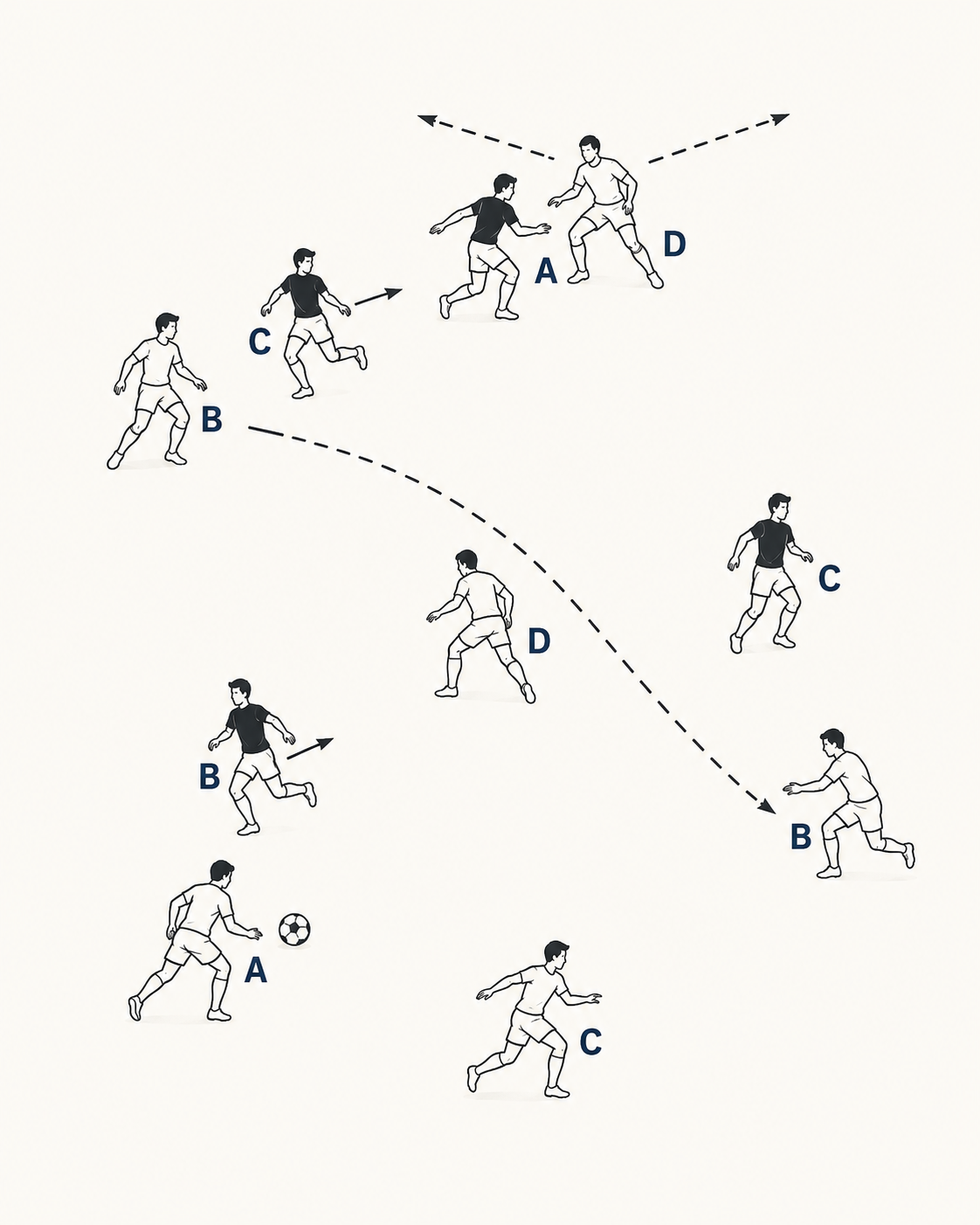
Zego’s influence reaches into the tactical development of modern futsal. He became closely associated with the development and teaching of the 4–0 system—an approach built around movement, awareness, interchange, and the freedom of players to recognize and solve problems.
“When we allow people to think, we give them the freedom to create.”
Rather than directing every movement in advance, Zego teaches players to observe opponents, understand space, and make decisions. The goal is not simply to memorize patterns. It is to develop intelligent and creative players.
Influence that travels through generations
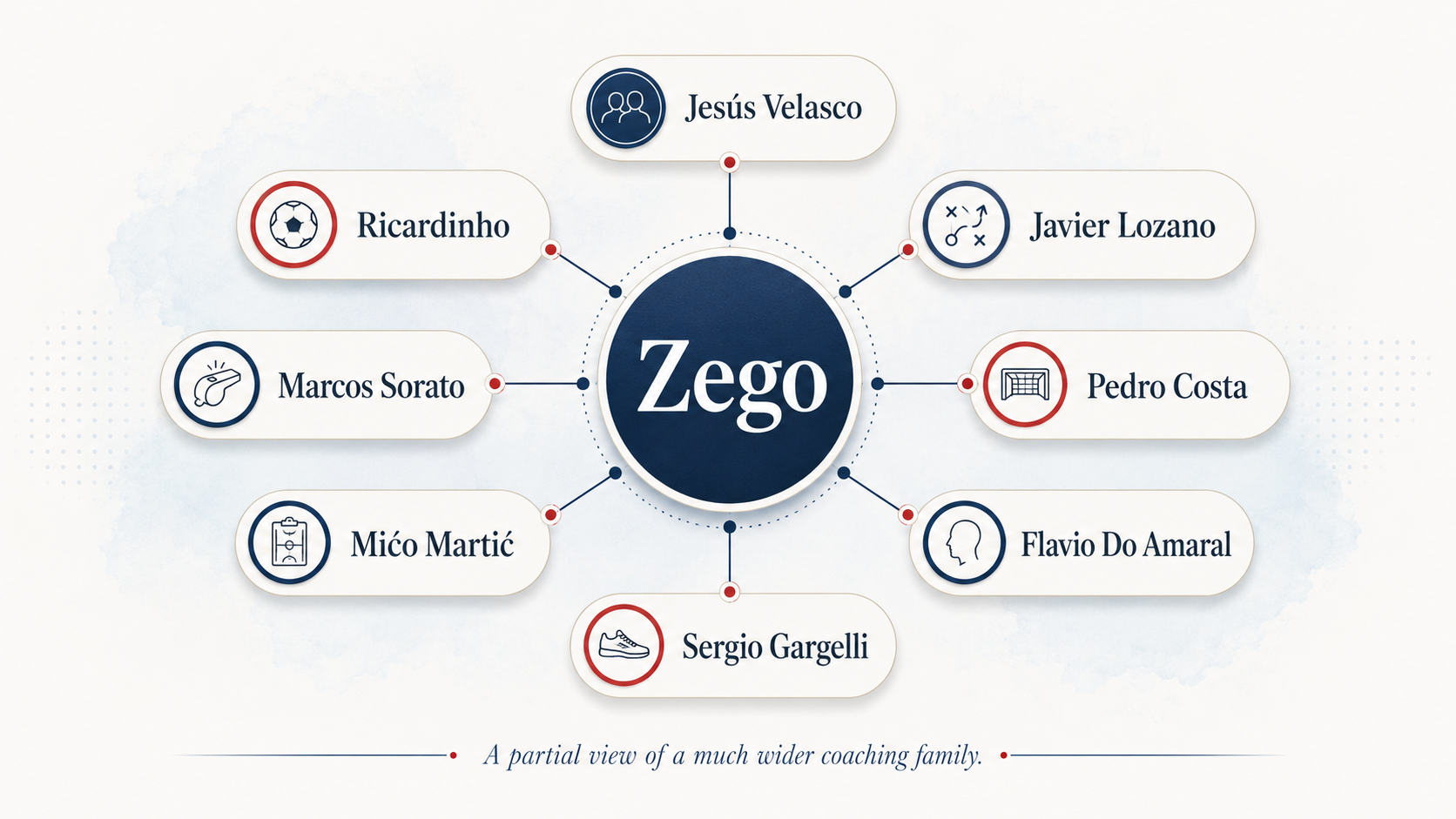
Zego’s impact travels through people. Players and coaches he taught carried his methods into elite clubs, national programs, and emerging futsal communities—creating new branches of a living teaching lineage.
A teacher without borders
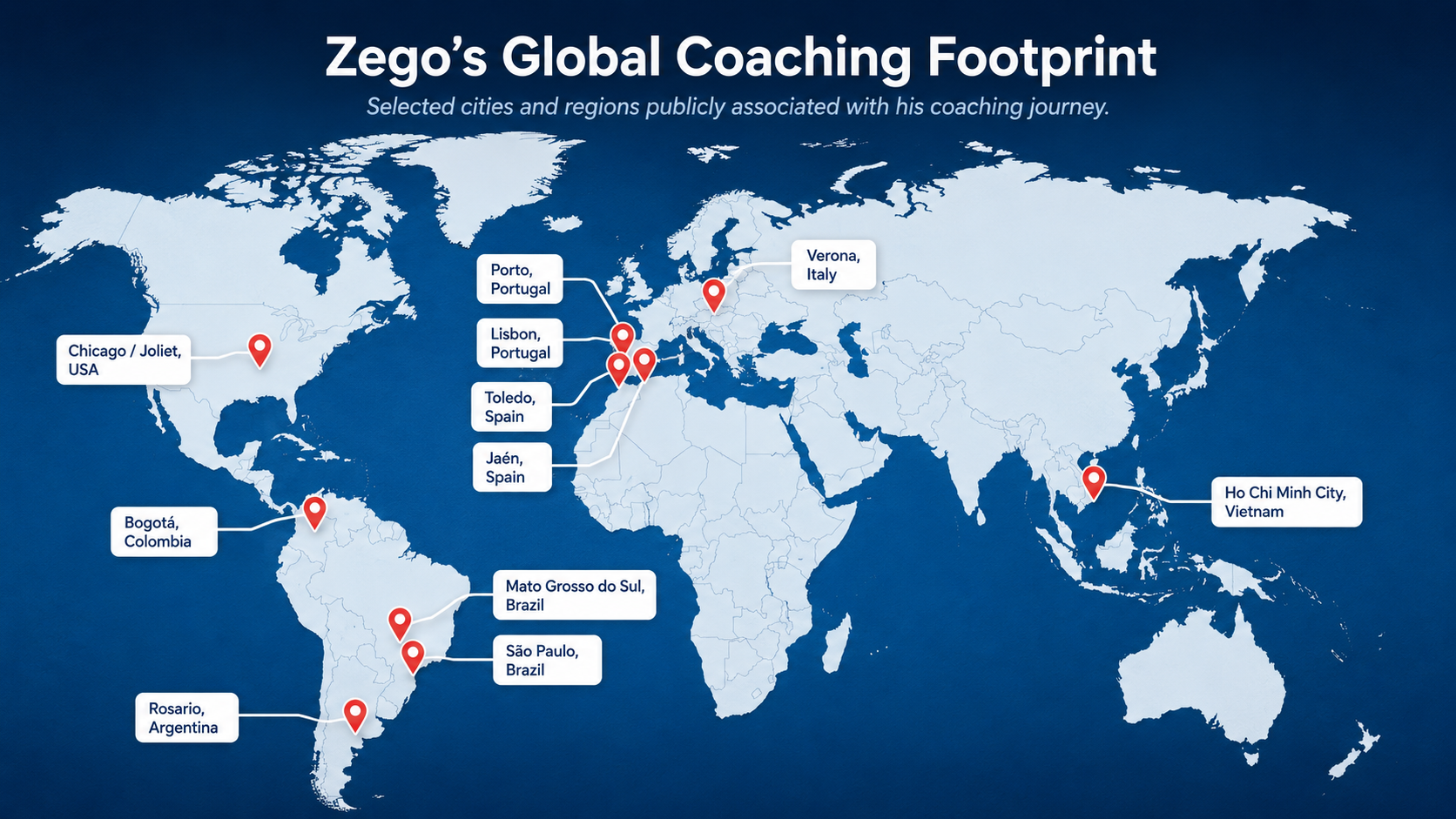
Zego has worked with adult and youth teams across approximately 20 countries, sharing futsal knowledge in established programs and emerging futsal communities. His career has included substantial time in Spain, work in Brazil, and teaching relationships that reached clubs and national-team environments around the world.
Among those chapters, he spent eight years in Spain working with two major futsal clubs—years that reflect the depth and continuity of his club work there.
Across each chapter, the larger objective remained the same: develop people who could understand the game, teach it well, and continue building after he left.
Selected chapters from a global careerExplore clubs, teams, and teaching connections
Played for or coached
Teaching, exchange, or coaching lineage
National cultures reached by the 4–0 system
These connections include playing, coaching, youth development, professional exchange, and the broader transmission of Zego’s methods.
The work he chose
After decades at the highest levels of futsal, Zego could have kept his work centered on elite competition. Instead, he repeatedly returned to teaching children—building places where young players could feel safe, challenged, connected, and free to enjoy the game.
“Bring hope to children.”
For Zego, the court is not only a place to produce better players. It is a place to build relationships, create a sense of family, and bring children hope.

Built from the ground up
“The base is being neglected, and it has to be recovered.”
Recovery begins with children, families, teachers, and local coaches who understand both the game and the responsibility of creating healthy places to learn it—leaders who know their community and teach with care, craft, and patience.
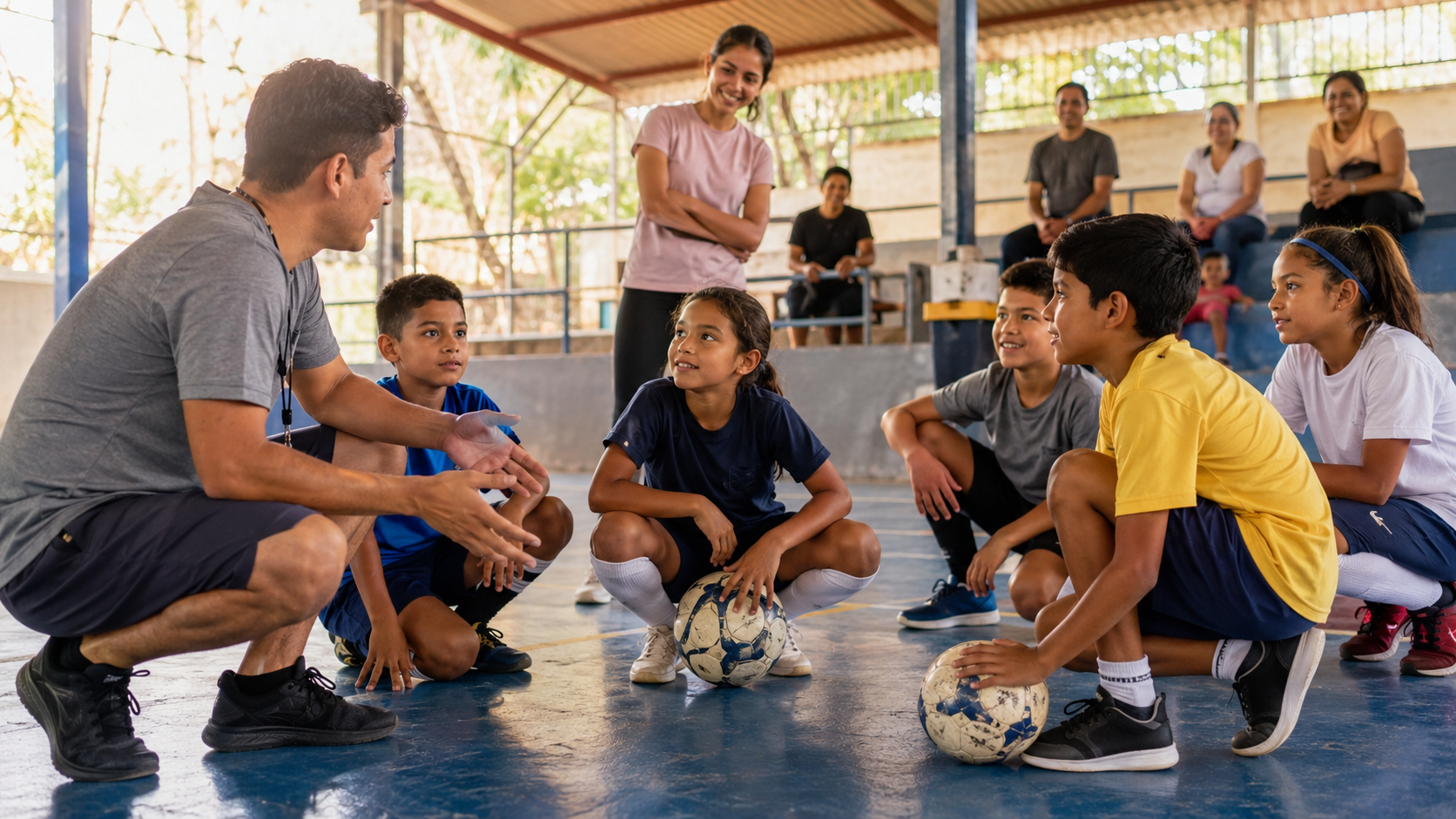
From local roots to national strength
This work cannot depend only on elite academies or occasional events. It must be repeated in communities: prepare local leaders, create consistent places to play, help children enjoy the game, and give them meaningful opportunities to continue.
When local environments take root, they strengthen clubs, leagues, coaches, players, and—over time—national programs.
Zego and the American Futsal Foundation
Zego’s philosophy helps guide AFF’s approach to youth futsal. The Foundation’s work goes beyond placing a ball on a court. AFF creates environments where children can discover the real game, learn through age-appropriate instruction, return to play consistently, and find a pathway that can grow with them.
His influence can be seen in AFF’s emphasis on teaching, creativity, local leadership, schools, recurring play, and the responsibility to protect the youth game.
From philosophy to practice
What AFF carries forward
An AFF guiding principle
Play Free
To play free is to have the freedom to think, create, and solve the game. It also means having the opportunity to play at all.
AFF carries both meanings forward by protecting independent decision-making and working to bring the cost of participation as close to zero as possible for families.
Teach the real game
Introduce futsal as its own sport—with its laws, rhythm, and culture—so children learn the game itself, not a diluted substitute.
Protect creativity
Give young players room to observe, decide, and invent. Thinking on the court is part of how the game is passed on.
Build local leaders
Prepare coaches and teachers who understand their communities and can continue the work with care after the first introduction.
Create lasting pathways
Pair discovery with recurring places to play, so interest can grow into belonging, development, and long-term opportunity.
Knowledge becomes legacy
The legacy is what others carry forward.
Zego’s story is not only about where he coached or whom he influenced. It is about knowledge passed from one person to another—from coach to player, from teacher to teacher, and from one futsal community to the next.
That is the work AFF hopes to continue: care for the youth game, teach it faithfully, and help more communities build something that lasts.
Help carry the game forward.
Support youth-centered futsal education, access, and community development shaped by a lifetime of teaching the game.